










New research presented to New Mexico lawmakers underscores the need for more housing options, improved financing access, and policies that expand affordability.
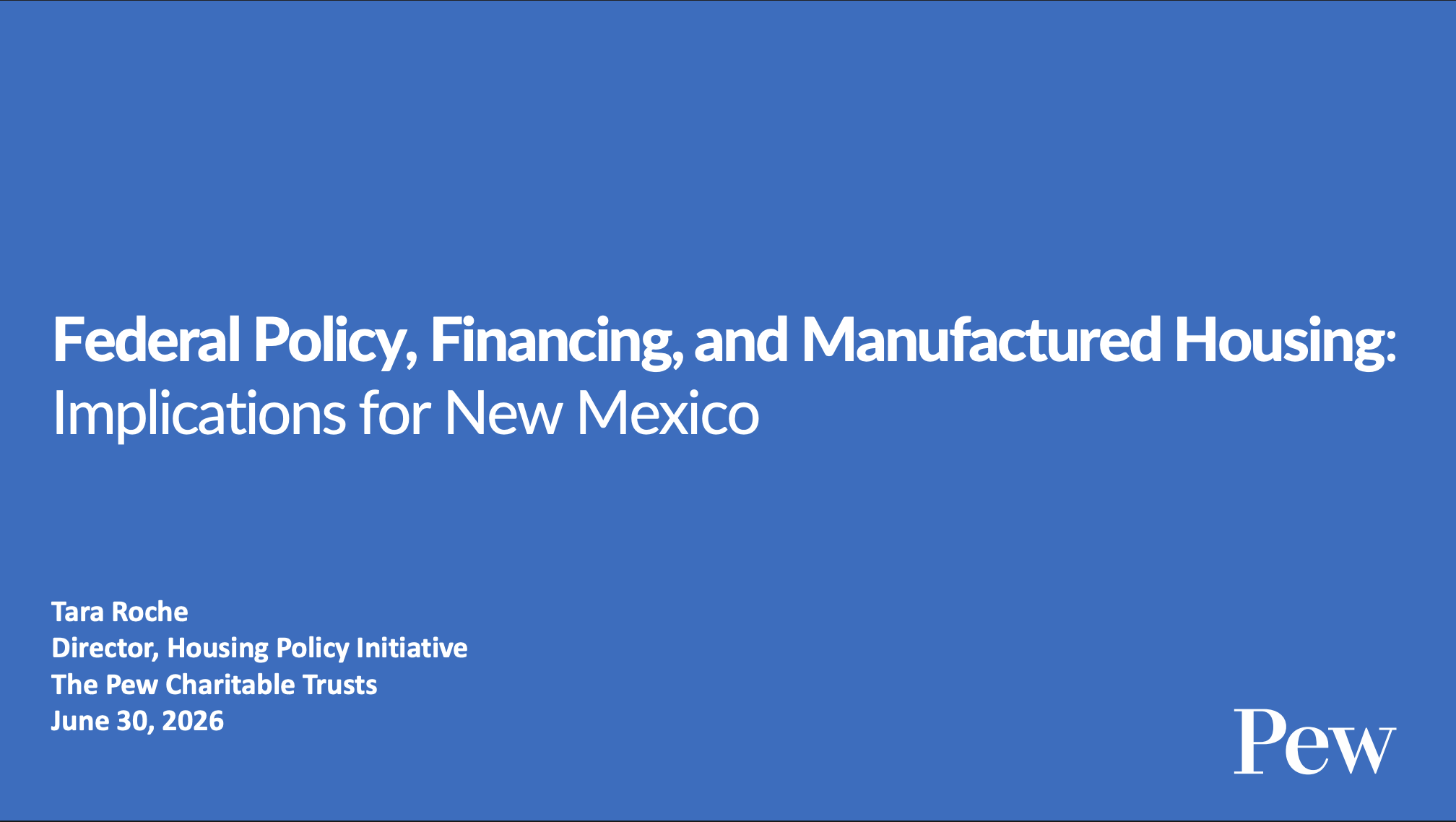
Housing affordability remains one of New Mexico's most pressing challenges. During a recent meeting of the Federal Funding Stabilization & Affordability Subcommittee, representatives from the U.S. Department of Housing and Urban Development (HUD) and The Pew Charitable Trusts presented research examining the state's housing supply, financing obstacles, and the growing role of manufactured housing.
The presentation highlighted an issue REALTORS® know well: when housing inventory fails to keep pace with demand, the effects ripple throughout the market, contributing to higher rents, rising home prices, and fewer opportunities for New Mexicans to achieve homeownership.
View and download the presentation by clicking the image below.
Small Mortgages Are Becoming Harder to Obtain
One of the report's most striking findings focused on financing for lower-cost homes.
Nationally, only 26% of homes priced below $150,000 are financed with a traditional mortgage, compared with 71% of homes priced above that price point. According to Pew, many lenders avoid issuing smaller mortgages because they often generate the same processing costs as larger loans while producing significantly less revenue.
For New Mexico, where entry-level housing plays an important role in many communities, this presents a meaningful barrier.
From 2018 through 2025:
- 169,365 mortgages were originated in New Mexico.
- 16,767 were for loans under $150,000.
- Small mortgages represented about 10% of all mortgage originations statewide.
The report also found that smaller mortgages are used most frequently in many rural counties, where home prices remain lower than in larger metropolitan areas.
Alternative Financing Is Filling the Gap
When traditional mortgages are unavailable, many buyers turn to alternative financing arrangements.
According to Pew's research:
- Approximately 36 million Americans have used alternative financing at some point.
- These arrangements include land contracts, lease-purchase agreements, personal property loans, and seller financing.
- Roughly one in five home borrowers has relied on one of these financing methods.
While these options can create pathways to homeownership, Pew also cautioned that they often carry significant consumer risks, including unclear contract terms, loss of accumulated equity, balloon payments, habitability concerns, and situations where buyers pay property taxes before obtaining full ownership.
Land Contracts Play a Larger Role in New Mexico
The presentation also examined land contracts, a financing method that has become more common in New Mexico than in many other states.
Pew found:
- New Mexico ranked eighth in the nation for recorded land contracts.
- More than 40% of the state's land contracts occurred in Bernalillo County.
- Land contracts are typically used for older, smaller, and lower-priced homes.
- Approximately 75% involve residential properties, while the remaining 25% involve commercial, agricultural, or other property types.
The research suggests these contracts often emerge where buyers face challenges obtaining conventional financing.
Manufactured Housing Remains an Important Housing Option
Manufactured housing was another major focus of the presentation.
According to Pew:
- Approximately 350,000 New Mexicans live in manufactured or mobile homes.
- Today's manufactured housing includes a wide range of products, from traditional single-section homes to multi-section models, Energy Star-certified homes, CrossMod® designs, and future multi-story and duplex configurations.
The presentation also emphasized the distinction between older mobile homes built before 1976 and manufactured homes built after the federal HUD Code took effect in 1976, which are constructed under modern national safety and construction standards.
Looking Ahead
The Pew presentation reinforced a challenge facing communities across New Mexico: increasing housing affordability requires more than simply building additional homes. Expanding access to financing, supporting responsible lending for lower-cost homes, and recognizing the role of manufactured housing are all pieces of the solution.
For REALTORS®, these discussions are especially important because they directly affect buyers' ability to enter the market, sellers' pool of qualified purchasers, and the long-term health of New Mexico's housing market.
As state and federal policymakers continue evaluating housing policy, research like this helps inform conversations about expanding housing opportunities while protecting consumers and improving access to sustainable homeownership.


Comments