










When buyers ask, “What’s it like to live here?” REALTORS® have a powerful way to answer beyond bedrooms and square footage: Walk Score and Bike Score.
These tools, provided by Redfin, turn lifestyle into something tangible. Instead of saying a home is “close to everything,” you can show exactly how close and how accessible.
What Walk Score Actually Tells You
Walk Score measures how easy it is to live in a location without relying on a car. It assigns a number from 0 to 100 based on walking distance to everyday essentials like grocery stores, restaurants, parks, and schools.
Behind the scenes, it analyzes hundreds of walking routes and gives the most points to amenities within a short walk, with fewer points as distance increases.
Bike Score works in a similar way, factoring in bike lanes, terrain, and connectivity.
Turning Location Into Lifestyle Insight
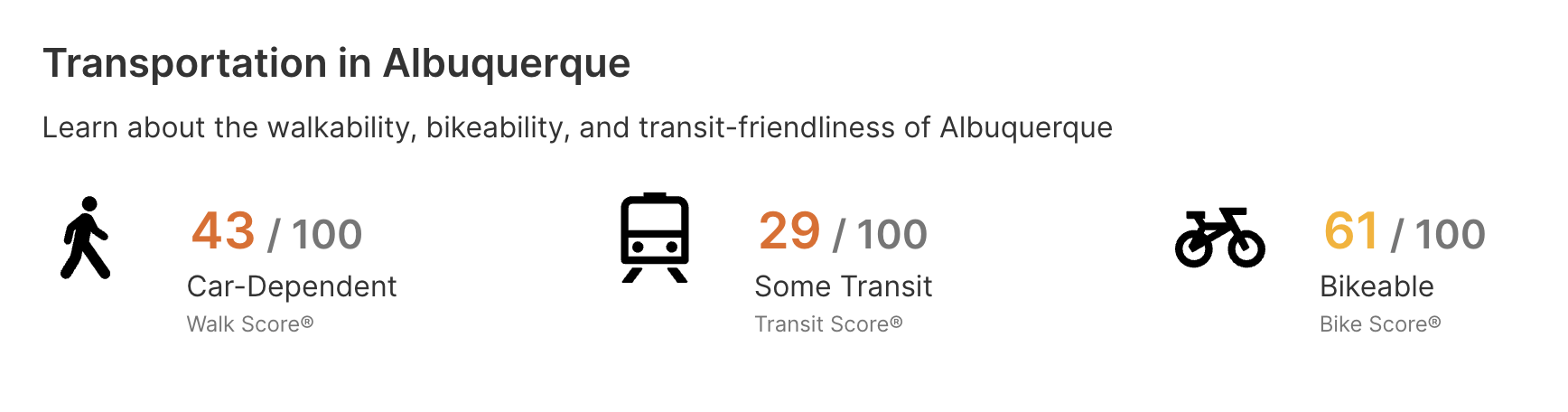
In a city like Albuquerque, where many areas lean car-dependent, these scores help set expectations early. A Walk Score of 43, for example, signals that some amenities are nearby, but a car will still play a big role in daily life.
That clarity matters. It helps buyers prioritize what fits their routine, whether that is quick coffee runs on foot, an easy bike commute, or simply knowing how often they will need to drive.
A Valuable Tool for Buyer Conversations
Using Walk Score or Bike Score does more than add data to a listing. It helps you:
- Frame lifestyle, not just location
- Compare properties more objectively
- Align homes with a client’s daily habits
For a buyer relocating from a dense, walkable city, this can be a reality check. For others, it may highlight hidden value in a neighborhood they had not considered.
A Smart Approach Within Fair Housing Guidelines
Walk Score and Bike Score also offer something just as important: a way to keep conversations objective and compliant.
REALTORS® know that discussions around neighborhood “safety” can quickly become problematic under Fair Housing guidelines. Rather than relying on subjective descriptions or personal opinions, these scores provide neutral, data-driven insights about how a location functions.
Instead of characterizing an area, you can point to measurable factors like proximity to amenities, access to transportation, and ease of mobility. It keeps the focus on how a buyer can live in a space, not on perceptions about who lives there or what a neighborhood is “like.”
When clients ask questions that touch on safety, these tools can help redirect the conversation toward resources and objective data, while encouraging clients to explore what is important to them through their own research.
It Can Even Influence Value
Walkability is not just about convenience. It can impact pricing. Even small increases in Walk Score can contribute to a home’s overall appeal and marketability.
That makes it a useful talking point when discussing pricing, marketing, or long-term investment potential.
The Takeaway
Walk Score and Bike Score are simple numbers with real meaning. They help translate a home’s surroundings into everyday experience.
Because at the end of the day, buyers are not just choosing a house. They are choosing how they will live in it.
Learn more at Redfin.com



Comments