










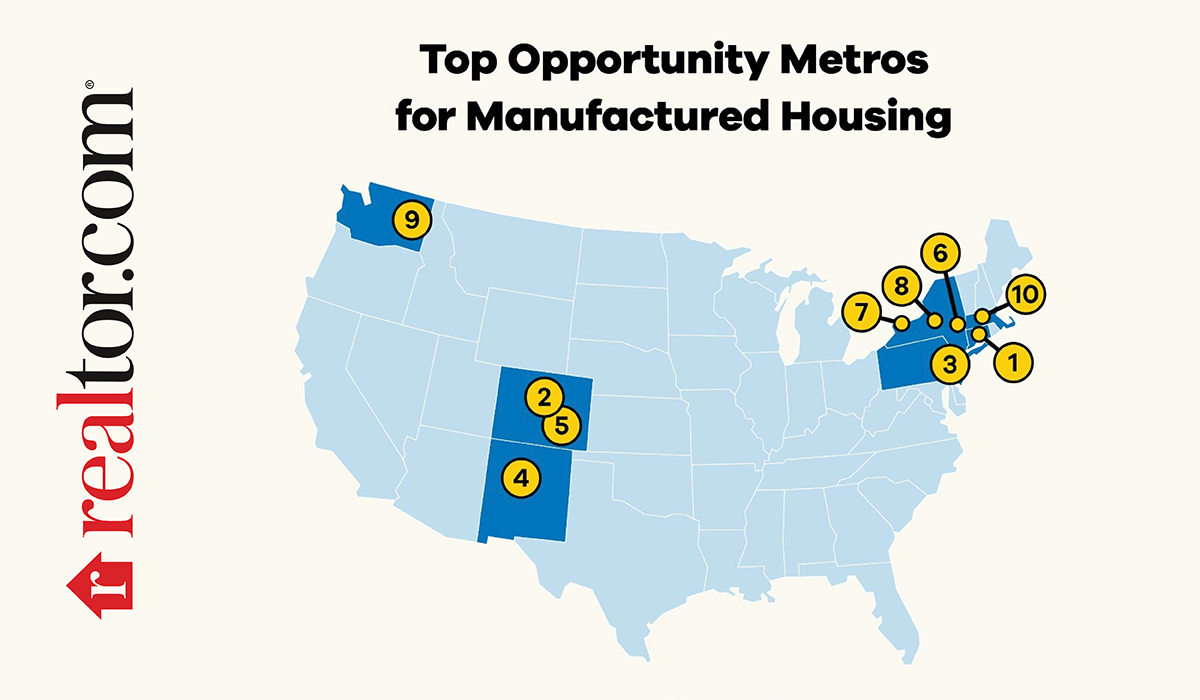
A new Realtor.com® report identifies Albuquerque as one of the nation's top five markets that could benefit from expanding manufactured housing, highlighting opportunities to increase affordable homeownership options through changes to federal regulations and local zoning.
According to an October 26 Realtor.com® report, only 17% of zoned land nationwide explicitly allows manufactured housing communities. While recent federal reforms could make these homes more affordable and easier to construct, local zoning restrictions remain a significant obstacle to expanding housing supply.
Albuquerque Ranks Fourth Nationally
Realtor.com® analyzed the nation's 100 largest housing markets to identify where manufactured housing could have the greatest impact on affordability and housing availability.
The analysis considered three factors:
- Starter Home Availability: Markets with fewer entry-level homes available for purchase.
- New-Construction Premium*: Areas where newly constructed homes carry a price increase.
- Land Affordability: Markets with relatively affordable land that could accommodate manufactured housing.
The top five markets identified were:
- Hartford, Connecticut
- Denver, Colorado
- Allentown, Pennsylvania
- Albuquerque, New Mexico
- Colorado Springs, Colorado
Albuquerque's ranking suggests that expanding manufactured housing could provide another pathway to homeownership, particularly for first-time buyers facing limited inventory and rising construction costs.
*What is New-Construction Premium?
New-construction premium refers to the additional cost buyers pay for a newly built home compared to an existing home in the same market.
For example, if the median price of an existing home is $350,000 and a newly constructed home is $420,000, the new-construction premium is 20% ($70,000).
In the Realtor.com® manufactured housing report, a higher new-construction premium indicates a greater price gap between new and existing homes. This suggests manufactured housing could provide a more affordable alternative to traditional new construction.
Federal Changes Could Reduce Construction Costs
The recently enacted 21st Century ROAD to Housing Act includes provisions intended to make manufactured housing more affordable and accessible.
One significant change removes the longstanding federal requirement that manufactured homes be constructed on a permanent steel chassis. According to Realtor.com®, eliminating this requirement could save approximately $10,000 in construction costs per home.
The change also provides greater design flexibility, allowing manufactured homes to more closely resemble traditional site-built housing.
Additionally, the President has signed an executive order in October establishing a Task Force on Manufactured Housing Innovation. The initiative brings federal agencies together to coordinate housing standards, financing, and policies intended to support manufactured housing development.
Local Zoning Remains a Barrier
Despite federal efforts, local governments continue to determine where manufactured homes can be placed.
Zoning restrictions, minimum square footage requirements, architectural standards, and special permitting processes can limit manufactured housing development, even when homes meet federal construction standards.
The Realtor.com® research highlights an important distinction: Federal reforms may reduce the cost of building manufactured homes, but local policies ultimately influence whether those homes can be added to communities.
Modern manufactured housing offers opportunities to expand housing choices, particularly in markets where traditional construction costs make entry-level homes increasingly difficult to deliver.
Expanding Housing Options in Albuquerque
With Albuquerque ranking fourth nationally, the report underscores the potential for manufactured housing to contribute to the region's housing supply.
Manufactured homes are not a complete solution to housing affordability challenges, but they represent an additional option for meeting demand across different price points.
For local policymakers, builders, and real estate professionals, the findings reinforce the importance of examining how zoning and development regulations influence housing availability.
As federal housing policies evolve, local conversations about land use, development standards, and housing choices will remain essential to expanding opportunities for homeownership throughout the Albuquerque area.
Read More:
Realtor.com®: Just 17% of the Country Allows Manufactured Homes
Realtor.com® Economic Research: From Factory to First Home


Comments