










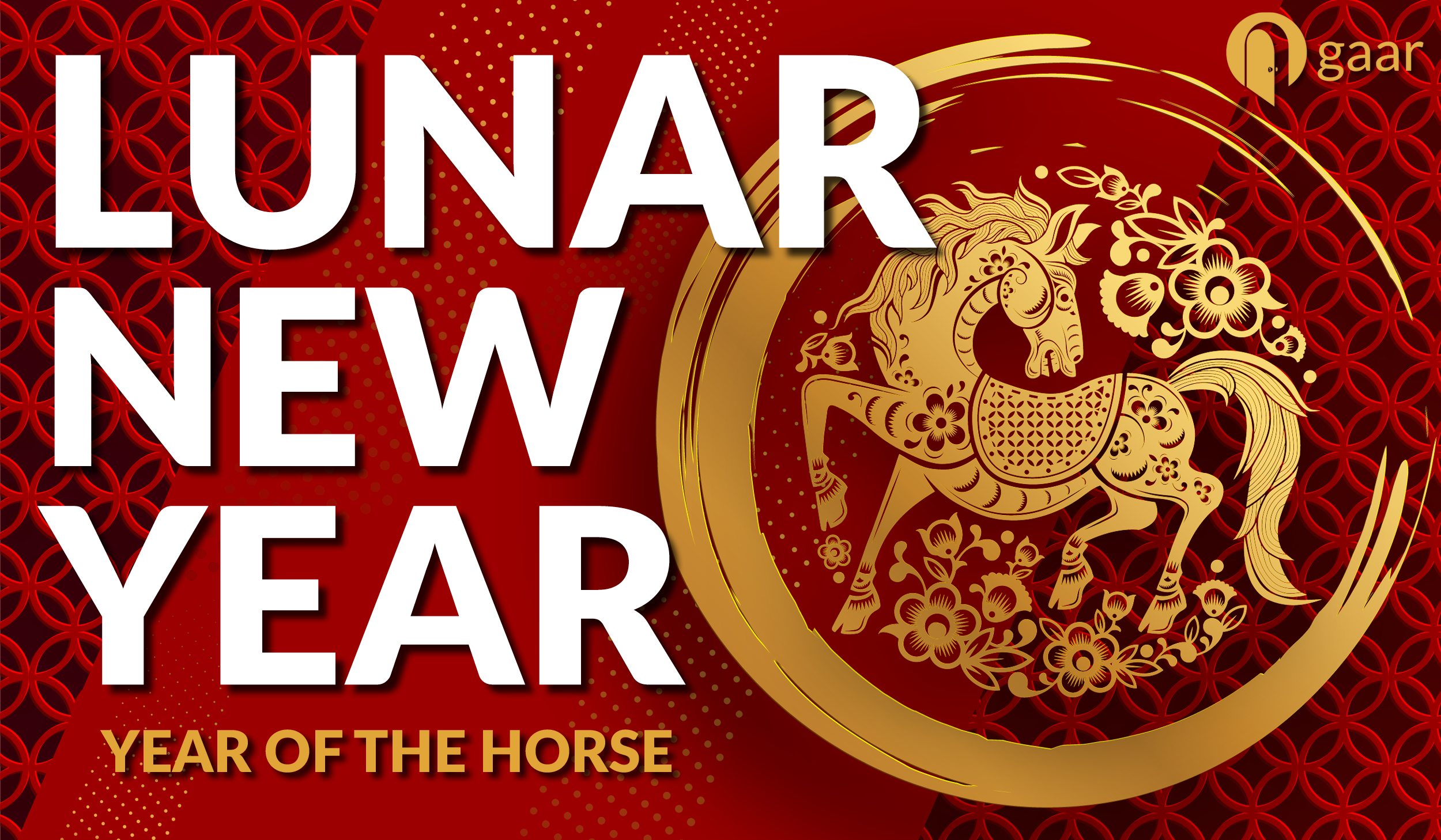
For 2026, the Lunar New Year is the Year of the Horse.
The Chinese New Year begins on February 17, 2026. Celebrations last up to 16 days, but only the first 7 days are considered a public holiday (February 17th–February 23rd).
The Korean New Year, or Seollal, will be celebrated on Tuesday, February 17, 2026. Seollal is a three-day celebration that begins on Korean New Year's Eve, February 16th. It's a time to spend with family and show respect to ancestors.
In Vietnam, the Lunar New Year is called Tết Nguyên Đán and will begin on February 17th and lasts for three days.
How to Celebrate in New Mexico
Lion Dances
- This year, as in previous years, Talin Market will lead in Chinese New Year celebrations in Albuquerque with Lion Dances on February 14th, 15th, and 17th.
- Sandia Resort and Casino is hosting a celebration that will include a lion dance performance and red envelopes on February 17th at 7:00pm.
- The Chinese Culture Center & Lin's Martial Arts Academy will hold a celebration featuring Kung Fu, Lion Dance, and traditional Chinese folk dance on February 21st from 1:00 pm - 2:30 pm.
Children's Books
- Benson Shum has written two children's books that relate to the Chinese New Year, they are Alex's Good Fortune and We Are Lion Dancers. You can learn more about them here.
Chinese New Year Traditions
This year marks the Year of the Horse, which begins on February 17, 2026. Because the Chinese calendar is based on the lunar cycle, Chinese New Year can fall on any date between January 21st and February 20th. As a result, those born in January or February may want to confirm which zodiac sign they fall under. In the lunar zodiac, each animal symbolizes a year and is associated with specific attributes and characteristics.
Chinese New Year is the most auspicious celebration of the year. Traditionally, it begins on Chinese New Year’s Eve and lasts for 15 days, it culminates with the Chinese Lantern Festival which will be on March 3, 2026.
As with any cultural celebration, customs vary, but preparations often begin well in advance. These may include observing the Little Year, deep winter cleaning, and shopping for decorations, gifts, and food. The celebration typically peaks on New Year’s Eve, when homes are decorated with red paper lanterns to ward off bad luck. Families also write and hang paired lines of Chinese poetry known as couplets and prepare offerings to ancestors as a way to honor them, show respect, and give thanks for their guidance and protection.
No cultural celebration is complete without food, and Chinese New Year is no exception—there is an abundance of it. Many dishes are symbolic of luck, prosperity, and health, whether through their color or because their names sound like Chinese words associated with good fortune. Common foods include fish and pork belly for prosperity; dumplings and spring rolls for wealth; a whole chicken for luck; glutinous rice cakes to signify rising status; noodles for longevity; sweet rice balls and pork meatballs for family harmony; and shrimp for happiness. These dishes are served during the reunion feast, a cherished family gathering held on New Year’s Eve when, if possible, all family members come together. New Year’s Day is traditionally spent visiting elders, extended family, and neighbors.
Gift-giving is also an important part of the celebration, with symbolism guiding many traditions. Red envelopes containing money are given to children to represent prosperity, often collected from parents, relatives, and friends. Fruit is another popular gift—especially kumquats and tangerines, whose names are associated with luck, and in the case of kumquats, gold and good fortune.
To learn more about the Chinese New Year and Year of the Horse, visit here.
To learn more about the Korean New Year, visit here.
To learn more about the Viet Tết Nguyên Đán, visit here.
This blog is presented by the ABCD Committee


Comments