










From Alburquerque to Albuquerque, our city’s name offers a glimpse into the Hispanic history that continues to shape our community.
Every year from September 15 through October 15, Hispanic Heritage Month recognizes the histories, cultures and contributions of Hispanic and Latino Americans. In Albuquerque, that heritage is not difficult to find. It surrounds us in our neighborhoods, architecture, food, traditions, language and even the name of our city.
Long before Albuquerque became the city we know today, the Middle Rio Grande Valley was home to Pueblo communities with histories stretching back thousands of years. Spanish settlement later added another chapter to the region’s complex cultural story, creating influences that remain deeply connected to New Mexico today.
What’s in a Name? Quite a Bit, Actually.
Albuquerque was formally established in 1706 as La Villa de Alburquerque, a Spanish colonial settlement along the Rio Grande. The villa was named in honor of the Duke of Alburquerque, who was serving as Viceroy of New Spain. Somewhere along the way, the first “r” disappeared, leaving us with the Albuquerque spelling we know, love and occasionally have to double-check.
That history is also the origin of Albuquerque’s familiar nickname, the Duke City.
More than three centuries later, Spanish names remain part of the vocabulary of everyday life here. We travel along the Rio Grande, enjoy the shade of the bosque, look east toward the Sandia Mountains and cross streets, neighborhoods and communities whose names reflect generations of history.
Albuquerque’s Hispanic heritage, however, extends far beyond place names.
Generations of Influence
Hispanic culture has played a significant role in shaping the Albuquerque we recognize today. Its influence can be seen in adobe architecture and historic plazas, heard through music and language, tasted in New Mexican cuisine and experienced through traditions passed from one generation to the next.
Communities such as Atrisco add even deeper layers to that story. Spanish records date the establishment of Atrisco to 1703, before the formal founding of Albuquerque. The historic El Camino Real de Tierra Adentro also connected New Mexico with communities farther south for centuries, carrying people, goods, traditions and ideas through the region.
These influences did not develop in isolation. Albuquerque's identity grew through the intersection of Indigenous, Spanish, Mexican and, later, American cultures. Hispanic Heritage Month offers an opportunity to learn more about one important part of that larger story while recognizing the people who continue to carry its traditions forward.
Celebrating Hispanic Heritage in Albuquerque
Today, Hispanic and Latino culture remains an active part of Albuquerque rather than simply a chapter in its history.
Throughout Hispanic Heritage Month, local organizations, museums, cultural institutions, businesses and community groups offer opportunities to experience that heritage through art, music, food, education and community celebrations.
- City of Albuquerque Hispanic Heritage Month Kick-Off: September 9th, Old Town Plaza
- National Hispanic Cultural Center Foundation's Maravilla Gala: Saturday, September 12th at Hotel Albuquerque
- Albuquerque Public Library's Make Your Own Nicho: Wednesday, September 16th at 5:30 pm at Erna Fergusson Library
- Albuquerque Public Library's Spanish Story Time: Thursday, September 17th at 11:15 am at Los Griegos Library
- Somos Albuquerque: Saturday, August 19th at National Hispanic Cultural Center at 4:00 pm
- Open Space Visitor Center Annual Hispanic Heritage Celebration: Saturday, September 19th from 4:00 - 8:00 pm
- Hispano Philanthropic Society Leadership Speaker Series: Thursday, September 24th from 4:30 -6:30 pm
- Rio Rancho Library Fiestas Patrias 2026: Saturday, September 26 at 10:00 am at Loma Colorado Main Library
- Fiesta Flamenca Burqueña: Saturday, September 26th from 6:00 - 9:00 pm in Civic Plaza
- Heart of Corrales Fiesta Harvest Festival: September 26-27th, Casa San Ysidro
- The Albuquerque Folk Festival: Saturday, September 26th, National Hispanic Cultural Center
- New Mexico United Hispanic Heritage Night: Sunday, October 4th at 4:00 pm
- Albuquerque Public Library's Spanish Story Time: Thursday, October 15th at 11:15 am at Los Griegos Library
- Albuquerque Hispano Chamber of Commerce Hispanic Heritage Awards: Saturday, October 17th at Hotel Albuquerque
- ABQ Ciqlovia Street Festival: October 20th, International District
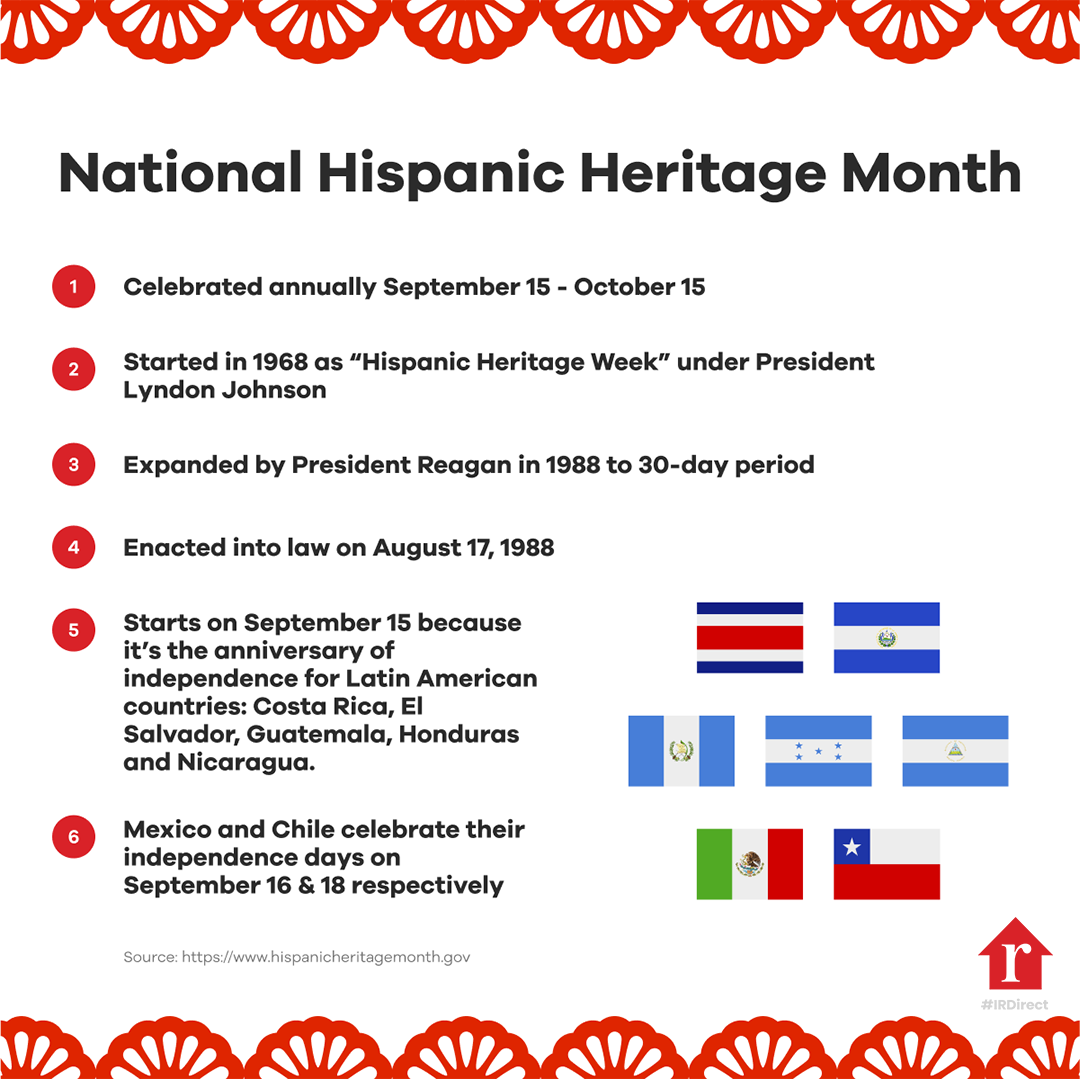
Hispanic Heritage Month began as a week-long celebration in 1968 under President Lyndon Johnson. In 1988, President Ronald Reagan expanded the celebration to a 30-day period, which was enacted into law on August 17, 1988. The month-long celebration gives more time to recognize the contributions of Hispanic and Latino Americans in the United States.
This blog is presented by the ABCD Committee


Comments